Adero Law Files Rebel Sport Class Action

    Adero Law has commenced a class action in the Federal Court of Australia against Rebel Sport on behalf of current and former salaried managers across Australia.

    The proceeding alleges that managers were regularly required to work significant unpaid hours, including before and after rostered shifts, during meal breaks, and outside of rostered hours including but not limited to: attending security call outs, preparing and amending rosters and completing the payroll for the store.

    The class action also raises allegations relating to unpaid overtime, penalty rates and other entitlements under the General Retail Industry Award.

    The matter forms part of Adero Law’s broader investigations into alleged systemic underpayment practices affecting salaried retail managers across Australia.

    Current and former Rebel Sport managers who worked during the relevant period may be eligible to participate in the proceeding.

    Read more- https://www.canberratimes.com.au/…/underpaid…/

    To know more about the Class Action, please refer Rebel Class Action.

    Lovisa Class Action Moves Forward in the Federal Court

    The Lovisa Class Action continues to progress through the Federal Court of Australia. The proceeding concerns allegations of a series of underpayments of entitlements and unpaid work affecting an estimated 10,800 current and former Lovisa employees across Australia.

    The class action relates to claims that certain employees were required to perform work outside their rostered hours without adequate compensation. These allegations raise issues commonly seen in large retail employment matters, including whether additional tasks performed before or after rostered shifts constituted work for which employees should have been paid. Lovisa has denied the allegations.
    Since the commencement of the proceeding, over 1,800 registrations have been received to date, reflecting the scale of the issues being examined by the Court.

    Progress of the Proceedings

    Following the commencement of the class action, the parties have exchanged formal pleadings setting out their respective positions. These documents define the issues in dispute and form the basis upon which the Court will ultimately determine the claims.

    The Federal Court has conducted case management hearings to determine how the proceeding should progress and to establish an appropriate framework for the next stages of the litigation. As a result of these hearings, the Court has ordered that the matter proceed to an initial trial, which is currently scheduled to commence in April 2027 for 3 weeks.

    The purpose of the initial trial will be to determine issues that are common across the group, rather than the individual circumstances of each employee. This approach is commonly adopted in large class actions to ensure that key legal and factual questions are resolved efficiently and consistently.

    Issues to Be Considered at Trial

    The initial trial is expected to focus on common issues relevant to the claims of group members. These issues may include whether employees were required or expected to perform certain tasks outside of their rostered hours, whether that time constitutes work for which payment should have been made, and whether employment records were maintained in accordance with legal requirements.

    Findings made by the Court on these common issues will assist in determining how the claims of group members are assessed more broadly, including in respect of calculating the underpayments and the liability of Lovisa

    Preparation Before Trial

    Before the trial takes place in April of 2027, both parties will undertake significant preparatory steps. These steps include agreeing on the specific common issues to be determined at trial and participating in a formal discovery process, which involves the exchange of documents relevant to those issues.

    This preparatory phase is an important part of ensuring that the Court has access to the necessary evidence to determine the matters in dispute.

    At this stage, the proceeding remains ongoing and no findings have been made by the Court in relation to liability, compensation, or outcomes for group members.

    Ongoing Updates

    The Court has approved a process that allows information about the proceeding to be made publicly available, including updates published on Adero Law’s website. Further updates will be provided as the matter progresses, including following future court hearings or other significant procedural developments.

    Current and former Lovisa employees, as well as members of the public, can access the latest publicly available information about the Lovisa Class Action through Adero Law’s website.

    ACT Light Rail: Heavy Burden for Canberra

    Canberra Light Rail – Expression of Interest Form 


    The future of Canberra is being laid track by track. With the city expanding rapidly, the ACT Light Rail network has promised to be a transformative force in how people move about the capital. Designed to connect workers, families, communities, and tourists safely and reliably, this modern transport solution is projected to carry up to 39,000 passengers daily in the years to come.

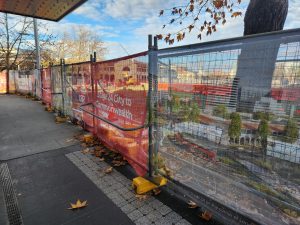
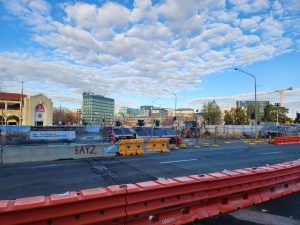
    The newest installation, Light Rail Stage 2A, will extend the current line 1.7km from Alinga Street to Commonwealth Park, following London Circuit West. On paper, this is a promising development aimed at revitalising the city centre and boosting local business engagement. But the reality on the ground tells a more complicated story one of disruption, financial loss, and insufficient government support.

    Since construction began earlier this year, road closures and traffic diversions have become the norm for Canberra’s city centre. In February 2025, London Circuit West was closed between Northbourne Avenue and Edinburgh Avenue. Then, in March, the disruption expanded eastward. Sections of the London Circuit East were blocked to motorists and cyclists between Northbourne Avenue and Theatre Lane, with fencing expected to remain until late 2026. Pedestrian access has been maintained, but the overall impact on accessibility is undeniable.

    For local businesses, these disruptions haven’t just been inconvenient, they’ve been devastating. Exorbitant rents, public liability insurance, and declining foot traffic have placed immense financial pressure on small business owners.

    The ACT Government’s response has been to announce a targeted business support package, unveiled on 12 May 2025. This includes free parking after 5:30pm Wednesday to Sunday, waivers for outdoor dining permit fees, additional security cameras, and promotional advertising to encourage foot traffic. While well-intentioned, the support appears largely symbolic.

    Free parking during off-peak hours does little to support businesses that operate between 9 am and 5 pm, when most of the revenue-generating activity occurs. Waiving a $2,000 annual permit fee offers minimal relief to businesses losing tens of thousands each month. And promotional campaigns, however well-designed, cannot mask the very real deterrent of fencing, construction noise, and reduced accessibility.

    This situation feels all too familiar. Sydney’s light rail project, marred by years of delays and business losses, stands as a cautionary tale. And yet, here in Canberra, history appears to be repeating itself, with the same slow government response and underwhelming compensation measures.

    It’s not too late to correct course. The ACT Government must acknowledge the real economic impact on local traders and develop a more comprehensive support strategy. That means direct financial assistance, practical solutions to increase daytime foot traffic, and clearer, more transparent communication.

    Progress often comes at a cost. But if that cost is the survival of Canberra’s small businesses, then we must ask ourselves: are we truly building a better city, or simply paving over the very communities that make it thrive?

    Do Canberrans have any recourse at law?

    Canberrans affected by the Light Rail project may have recourse against the ACT Government in a ‘private nuisance’ claim. In assessing the viability of such a claim, it is important to note current class action proceedings against the department responsible for the Sydney Light Rail, for similar disruptions, Transport for NSW.

    Hunt Leather Pty Ltd v Transport for NSW (Case nos S20 & S21/2025) and any forthcoming decision in the High Court in that matter should offer valuable guidance for Canberra businesses considering any similar action against the ACT Government.

    If you and your business have been significantly affected by the ACT Light Rail Project, contact Adero Law today, who are currently exploring a potential class action on the subject matter.
    Adero Law Issues Response to Union’s Claims of Vindication in Groping Allegations

    Adero Law represents the complainant in this matter and seeks to correct the public record regarding the Union’s internal investigation. The firm remains committed to pursuing all legal avenues to ensure a fair and independent resolution.

    Media Release Date: Wednesday, 19 March 2025

    Read the complete article here

    Lovisa Faces Class Action Over Unpaid Work and Missed Breaks

    The Sydney Morning Herald reports that Adero Law is leading a class action against Lovisa over allegations of unpaid work and denied breaks.

    Read more

    Merivale Agrees to No-Admission Payment of $19.25M to Former Employees

    News.com.au reports that Merivale has agreed to a $19.25 million settlement with former employees who alleged underpayment.
    The case, led by Adero Law, challenged the validity of Merivale’s employment agreement from 2009 onwards.

    Read More